

On 6 June 1944, the world witnessed the beginning of the Allied landings in Normandy—D-Day—marking a decisive turning point in the military campaign against Nazi Germany.
While D-Day is often remembered as the start of liberation in Western Europe, its relationship to the Holocaust is more complex and deeply intertwined.
By the time Allied forces reached the beaches of Normandy, the Holocaust was already operating at its most lethal scale. In 1944 alone, Auschwitz-Birkenau was operating at its highest killing capacity, particularly during the mass deportations and murder of Hungarian Jews. Around five million of the six million Jewish victims had already been murdered.
As Allied forces advanced from the west following D-Day, and the Soviet Army from the east, the Nazi control over occupied Europe began to collapse. This military pressure did not stop the genocide, but it did accelerate the disintegration of the system that sustained it. In response, the SS began evacuating camps, destroying evidence, and forcing prisoners on death marches. Auschwitz was eventually abandoned in January 1945 and liberated by Soviet troops on 27 January 1945.
D-Day did not end the Holocaust. But it played a crucial part in the broader military campaign that led to the defeat of Nazi Germany and, ultimately, the liberation of the camps.
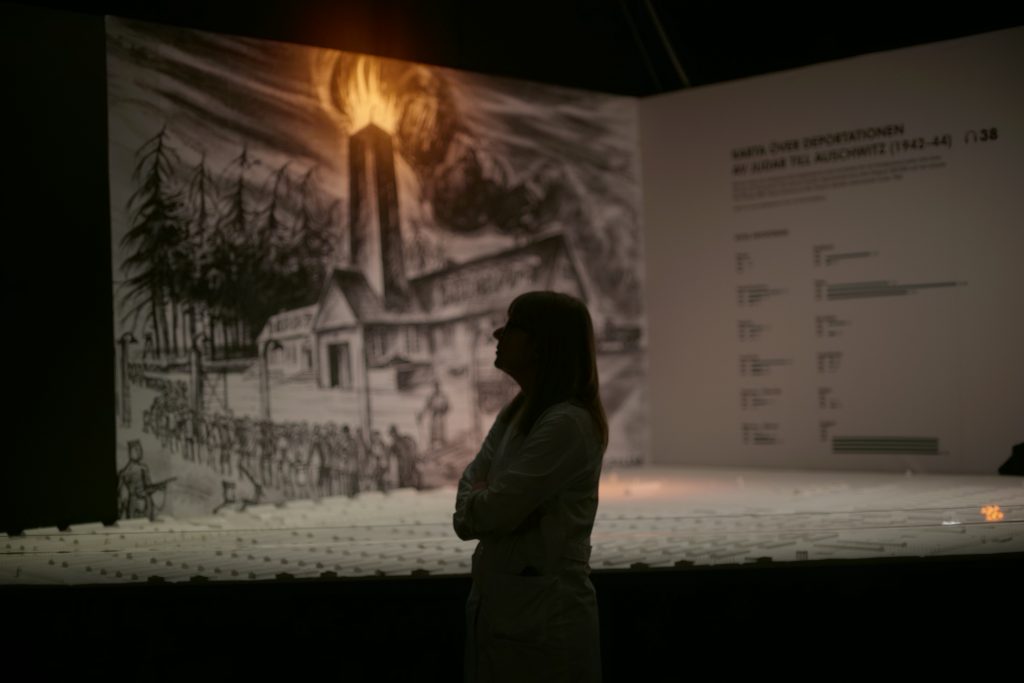
This connection between military history and the history of the Holocaust is one of the many layers explored in our exhibition, Auschwitz. Not Long Ago. Not Far Away, which will open at the United States Holocaust Memorial Museum in January 2027 and remain on view for 2.5 years.
As we prepare for this presentation, we continue to reflect on why understanding these overlaps matters, and why engaging with this history in its full complexity remains essential today.
Because understanding Auschwitz is not only about the past. It is about the choices, systems, and responsibilities that shape the present.