

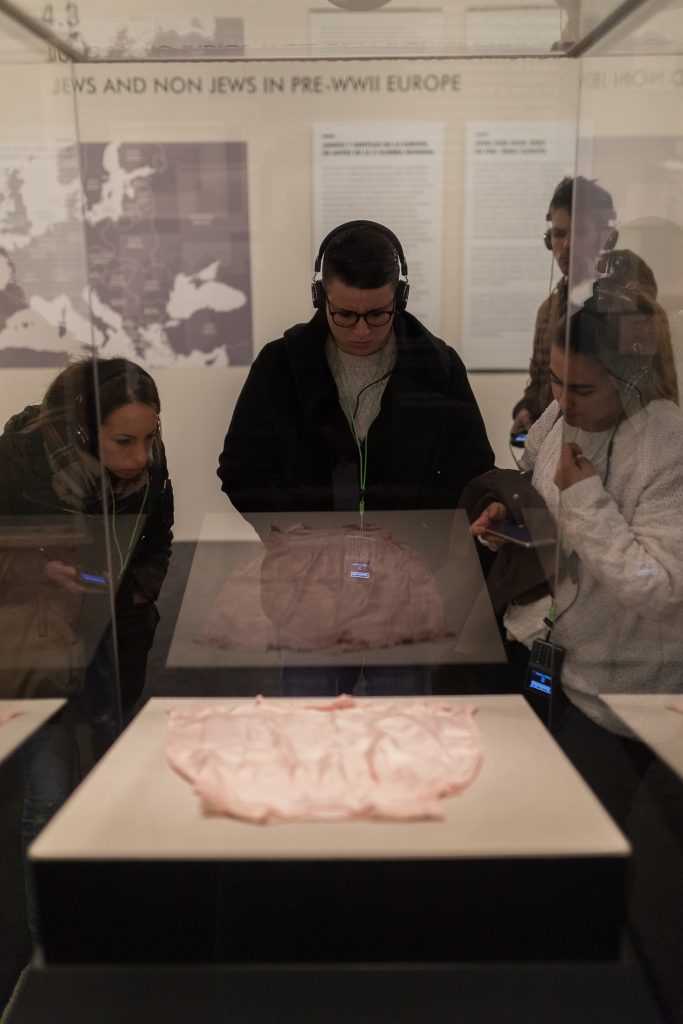
Auschwitz extends far beyond its physical boundaries. It marks a profound rupture in history and exposes how violence can be normalized, systematized, and administered—offering a critical lens through which to reflect on our present and on our responsibilities today.
To tell the story of Auschwitz today is not only to recount historical facts, but to reflect on what this place menas for us: what it reveals about belief systems when they are no longer questioned, about moral indifference, and about the fragile boundaries that sustain human societies.
From the outset, Musealia’s ambition was to take this history beyond its geographical limits and make it accesible to audiences around the world, without detaching it from its historical rigor or ethical weight.
Auschwitz. Not Long Ago. Not Far Away. is an unprecedented project, created in collaboration with the Auschwitz-Birkenau State Museum and developed alongside an international team of historians and experts, including Robert Jan van Pelt, Michael Berenbaum, and Paul Salmons. At the heart of the exhibition lies a deliberate combination: the best of academic research together with the authenticity of original artifacts—objects that carry the physical and moral weight of history itself.
The exhibition’s carefully constructed narrative allows visitors to understand Auschwitz as a place shaped by ideology, bureaucracy, and human decisions. It shows how antisemitism was the central driving force of the Nazi system of persecution and extermination, while also addressing the fate of other victim groups—Poles, Roma and Sinti, Soviet prisoners of war, people with disabilities, homosexuals, and political opponents—each subjected to different forms of persecution within the same overarching system of dehumanization.
Today, this narrative unfolds at the Cincinnati Museum Center, with the support of the Nancy & David Wolf Holocaust & Humanity Center, offering a space for learning, reflection, and critical engagement.
This exhibition does not seek easy conclusions. Its contribution lies in deepening our understanding of how Auschwitz became possible—and in encouraging reflection on the role that unchallenged dogma, blind faith, and moral indifference can play in the erosion of human responsibility.